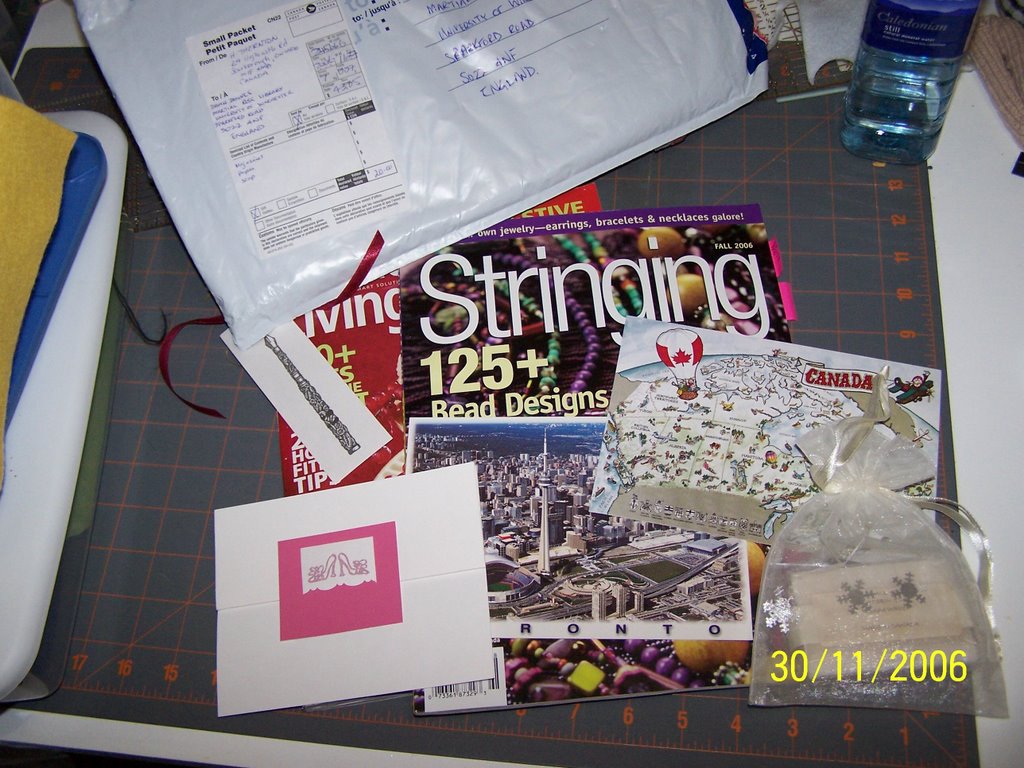
 This surprise package came in today from Canada. Heather is better known as Orange Blossom Goddess. She sent me two mags, soap, two postcards and lovely handstamped card and bookmark.
Your the best, thanks Heather!
This surprise package came in today from Canada. Heather is better known as Orange Blossom Goddess. She sent me two mags, soap, two postcards and lovely handstamped card and bookmark.This book took me a bit to get through, mostly because I was sick in between but also because it has a lot to it. I can see that Woolf spent a lot of time with this book, it is said that she rewrote this many times. She includes so many ideas and thoughts in this your head spins a bit. It definitely isn’t a book that you read just for pleasure. You have to concentrate and keep characters straight. There are a lot of characters, but they all are very distinctive. I don’t know how she does that. She writes through the eyes of many of the characters.
It is mostly the story of Rachel, a girl who has been very sheltered by her father and Aunts who raised her. She has no real idea what it is like to be in a relationship. She has never really experienced anyone that is in one, her Aunts being unmarried and her mother dying when she is young. She is taken under the wing reluctantly by Aunt Helen, who is married to her father’s brother. Helen convinces Rachel’s father to let her stay in the house they are staying in, instead of accompanying him on his work trip. During the voyage and the time on the island they become very close.
I find this books split into two different stories almost, the first the voyage and the second the time on the island. During the voyage Helen and Rachel feel each other out. They at first don’t like each other much and once Helen sorts out how naïve Rachel is, she decides it is her duty to help her become a woman safely. During the time on the island they are more like friends who really care for each other. The other reason I think the book could have been two, is that during the voyage Rachel has an intimate experience with Mr. Dalloway and there is a bit of a ending there. Then on the island they meet all these different people who expand the view of the novel a lot. I’m still amazed at how much Woolf puts in this book. There are ideas about society, marriage, religion, etc. I will have to read this again sometime. Not right now, but one day when I can really take another look at all she says.
I thought it was interesting that you meet Mr. and Mrs. Dalloway in this book. She wasn’t anything like I expected. I didn’t think of her as a society type person. Of course that is because I haven’t read the book yet, and don’t know anything about it. I only really know Woolf by the story or essay “Room of Ones Own”. So reading her has been very interesting.
She has two mystery series that are set in totally different places and eras. The first series she wrote was the Dorothy Martin series. These are set in modern times mostly in
The rest of the books in this series have been wonderful. Dams has done her research and knows what it would have been like for servants and their “betters” to relate to each other. She also covers the differences between the different immigrants that were coming over to the new world. Hilda is being courted by an Irish Catholic fireman, Patrick Cavanaugh, and this is a conflict for her Protestant family. You get a good feel for how difficult it was when
This book focuses on Hilda and her younger brother Eric who has just arrived from Sweden. Their mother is over protected and he is finding his new surroundings difficult to deal with. Hilda is understandably worried about him. A circus comes to town and his acrobatic friend Fritz, a German boy, goes to see it without permission. He disappears and is found later sexually abused and badly hurt. For some reason, Hilda gets it in her head that Eric is going to try and figure out who did it. There isn’t any indication in the book that he would or did try to find anything out. She also worries and frets that Eric will try to run away to the circus. With what happened to his friend, that wasn’t likely!
About half way through the book Dams finally sorts things out and we do see Eric run off because he is unhappy at this job. He jumps on a orphan train that came through South Bend and he was found and sent back hom. He then is hired to work with horses, a job that he takes to right away. When Patrick and Hilda decide to treat him to the circus and they run across people they think might have hurt his friend, Dams does it again! Eric runs after the people, gets lost in the crowd and Patrick spends the night and part of the next day looking for him. (This is after finding a young boy dead by one of the Circus wagons.) I just can’t see Eric running up to do…what…to this man that might have hurt his friend. Eric is young in the story and would not be able to do anything really, but get himself into trouble. Especially since he has his sister and her beau there also!
I love reading travel writing. I especially like those where the writer actually interacts with the people of the country on a very personal level. Josie Dew is one who puts caution to the wind and just goes out and sees what happens. If you like Bill Bryson you will like Josie Dew, she has the same sense of the absurd and sees the characters around her. She writes very well and keeps you interested. Sometimes travel books have a down time, when the person has been on the road so long they are getting a bit tired of it. Josie never gets to that point. She seems to have boundless energy.
In this book she is traveling by bicycle in
She starts in
Probably the funniest time was one night when she wanted to find somewhere to camp. She stopped at a house to see if the person knew of a place she could put her tent. She was invited in and allowed to bath and was fed by a lovely couple. They were disappointed when she insists on camping. The man rides with her to a local park where he leaves her to set up the tent. As she is getting settled for the night she hears sounds outside the tent that worried her, it turned out to be three men. The men were sent by the couple to check on her, let her know that it is supposed to rain and they all had gifts. Then the couple show up with supper. The rain starts very late in the night and she is visited again by one of the men from early trying to get her to come to his family home so that she doesn’t have to get so wet. She refuses as kindly has she can. In the morning she is awaken again by someone with her breakfast. Her description of this one night is so funny; you can’t help but laugh out loud.
She includes some history, but not too much. She also has a really nice glossary in the back, a very small index, and a complete list of the equipment that she took with her. She also includes a chronology of Japanese history to help you place time periods she talks about. The illustrator does a good job with the maps which carry on the fun theme; the drawings are very funny interpretations of what happens to her.
This is Dews third book. In her first, The Wind in My Wheels, she writes a compilation of different trips she took on her bike, with or without other people. In her second, Travels in a Strange State she visited the
Titles of all her books in order of publication:
Travels in a Strange State
Ride in the Neon Sun
Sun in My Eyes
Slow Coast Home
Saddled at Sea
Stabenow is one author I am never disappointed with. Her books are set in Alaska, she has a great way of writing characters, and there is a real mystery in each book. Some series become just about the characters, but her books are true mysteries that happen to be a series. She doesn’t just write one series though; she has two along with lots of different editing jobs and short stories. Her website is www.stabenow.com where she has a blog and information about her writing and Alaska.
Her longest running series is about Kate Shugak who is an Aleut. She lives in a national park where she grew up. Her grandmother is a very important Aleut leader, which causes her some problems. Her grandmother is always after her to take up the reigns of leadership and Kate doesn’t want to. Kate went to college and worked as an investigator for the Anchorage D.A. She was investigating child abuse cases. We find out in the first book that she quit and moved back to the park when she was hurt badly during an investigation. Confronting a child abuser she ended up with her neck slashed. She ends up with both a scar on the outside, a rough voice and a bigger scar on her emotions. She hides out at her homestead and is brought back out by her lover who knows her skills are too important for her not to use them. She then goes on to investigate many crimes in the park and outside of it, but always in Alaska. The series characters are all wonderful. They are all believable with both good and bad characteristics. You learn about the modern native way of live and also the history and politics of Alaska.
This book takes Kate out of the park and into Anchorage. Charlotte Muravieff asks her to investigate a murder that happened 31 years before. Her mother was convicted of setting fire to the family home, killing one of her sons while the other escaped with a leg injury. Charlotte has found out her mother is dying and wants her to be released. She is convinced that her mother did not do the crime, even though her mother has confessed. Why did she confess and why doesn’t she want to talk to Kate about it? What is it about Kate investigating that has upset this powerful family? We get an interesting look into what the past of Alaska might have been, and also a look into the politics there.
Stabenow is one author I am never disappointed with. Her books are set in Alaska, she has a great way of writing characters, and there is a real mystery in each book. Some series become just about the characters, but her books are true mysteries that happen to be a series. She doesn’t just write one series
The series in order of publication:
A Cold Day for Murder
A Fatal Thaw
Dead in the Water
A Cold-Blooded Business
Play with Fire
Blood Will Tell
Breakup
Killing Grounds
Hunter’s Moon
Midnight Come Again
The Singing of the Dead
A Fine and Bitter Snow
A Grave Denied
A Taint in the Blood
A Deeper Sleep
This book totally surprised me! I have never seen the movie or read any of
I pulled it of the shelf at work, and it wasn’t very big and it was paperback…so I thought it might make a good vacation read. I was right, but I had no idea that I wouldn’t read it once but twice…in a row! I’ve never, ever done that. Even if I had to write on a book in college, I never read the whole thing again. But I had to this one. It wasn’t just that it was a good read. Spark has an interesting way of writing. I’ve not decided if she tried to write this in the way a child would have written it, or this is just how she writes. (I’ll have to read more of her books to sort that out.) She goes back and forth between the present and the future. I knew when I finished I had to reread to catch the little pieces that I missed the first time to put the whole puzzle together. I still haven’t totally. I actually went and looked at criticism book just to get someone else’s opinion.
I know that some people doing the challenge quit reading the book because they found the writing aggravating. I think that with all writing pre-WWII you have to keep in mind what was going on in history. Especially when it comes to the way women lived. Jean Brodie is one of the many thousands of women who lost their men in the WWI. Jean lost her true love she was sure she would have married. Since most of the men were either killed in the war, or where horribly traumatized and hurt, there weren’t enough men to go around to all the women of marriageable age. This lead too many women living the life of spinsters, so what were they suppose to do with their time? They had no husband or children to take care of, no household to maintain. Muriel Spark, unfortunately I think, waits until the middle of the book to explain what life was like for them. The start of chapter three she explains:
It is not to be supposed that Miss Brodie was unique at this point of her prime; or that (since such things are relative) she was in any way off her head, She was alone, merely, in the she taught in a school like Marcia Blain’s. There were legions of her kind during the nineteen-thirties, women from the age of thirty and upward, who crowded their war-bereaved spinsterhood with voyages of discovery into new ideas and energetic practices in art or social welfare, education or religion... she was not out of place amongst her own kind, the vigorous daughters of dead or enfeebled merchants, or ministers of religion, University professors, doctors, big warehouse owners of the past, or the owners of fisheries who had endowed these daughters with shrewd wits, high-coloured cheeks, constitutions like horses, logical educations, hearty spirits and private means. (42)
I’m still left with one question…and if you figure it out please write me! Why does the character
Muriel Spark has been very prolific in her writing. I include a list of the novels she has written. If you go to http://www.nls.uk/murielspark/ you will be connected to her archive in
1957 The Comforters
1958 Robinson
1959 Memento Mori
1960 The Ballad of Peckham
The Bachelors
1961 The Prime of Miss Jean Brodie
1963 The Girls of Slender Means
1965 The Mandelbaum Gate
1968 The Public Image
1970 The Driver's Seat
1971 Not to Disturb
1973 The Hothouse by the
1974 The Abbess of
1976 The Takeover
1979 Territorial Rights
1981 Loitering with Intent
1984 The Only Problem
1988 A Far Cry from Kensington
1990 Symposium
1996 Reality and Dreams
2000 Aiding and Abetting
2004 The Finishing School
Spark, Muriel. The Prime of Miss Jean Brodie. London: Penguin Books (2000).
I'm now reading Josie Dews book about traveling in Japan. I will be posting next week about Dana Stabenow though. I finished one of her books over my vacation, but I just had to write this review first.
Happy Reading
Added July 20th. My husband and I watched the movie "The Prime of Miss Jean Brodie" this weekend. It was very good and I can see why Maggie Smith one an Oscar. There is only area I was really disappointed. I knew it would be different to the book and it was. There was one area I thought they could have done and that was the hats. In the book there are 6 girls and each wears her hat in a different way. They are all suppose to wear them the perscribed way that the school set, but Spark makes a point of saying that these girls each wore theirs different. This was to show that even though they were wearing uniforms they were set aside from the rest of the girls. Unfortuantley, even though there were only 4 of the girls, they didn't each have their hat a different way, most even had them like the rest of the school girls.
I wasn't surprise that the end was different, though I did think it was interesting that they have a confrontation between Brodie and the girl that betrays. It made a powerful ending a suppose, but I thought the whole idea of Sandy becoming a Nun was an important fact in the book...where this wasn't touched at all. Anyway, it was a good movie and I did enjoy it.
 This is a really cool bird we saw the day we went birding. I've been wanting to see for all the years we've been here and we saw tons this time!
 Enjoying the windy day!
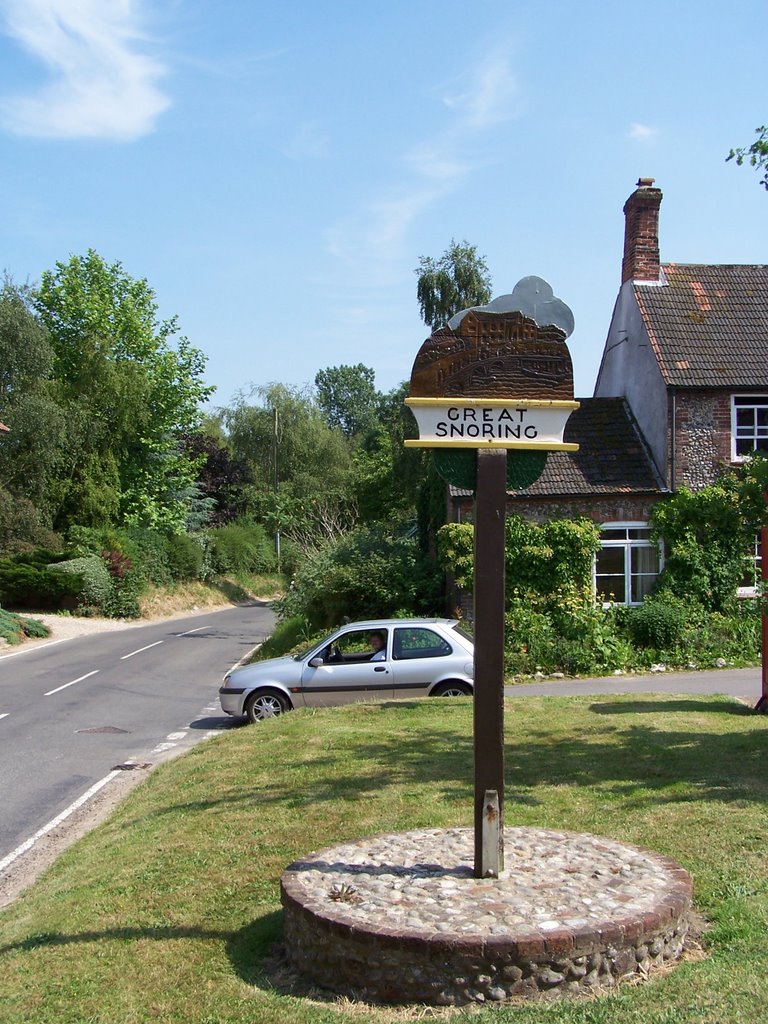 We decided that I should live in this town since I enjoy sleeping so much! That is our car also..I'm in there but you can't see me very well.
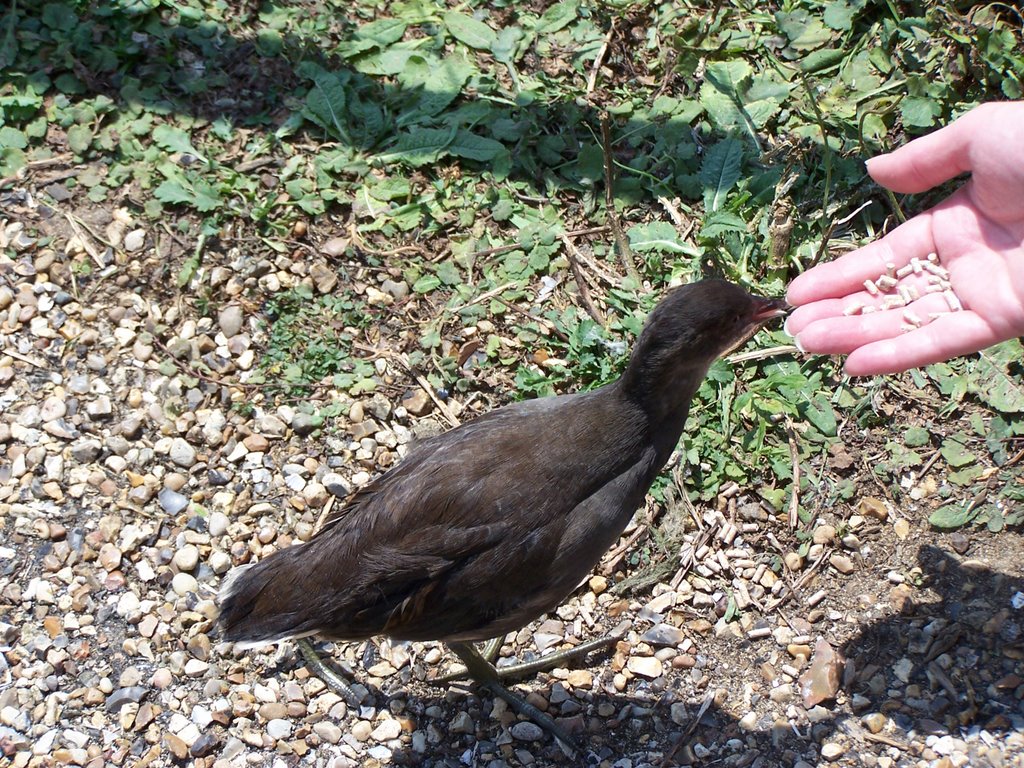 This is a juvenile Morhen. It got really excited and came running towards us when we first came up to the lake. I couldn't believe it would eat out of my hand.


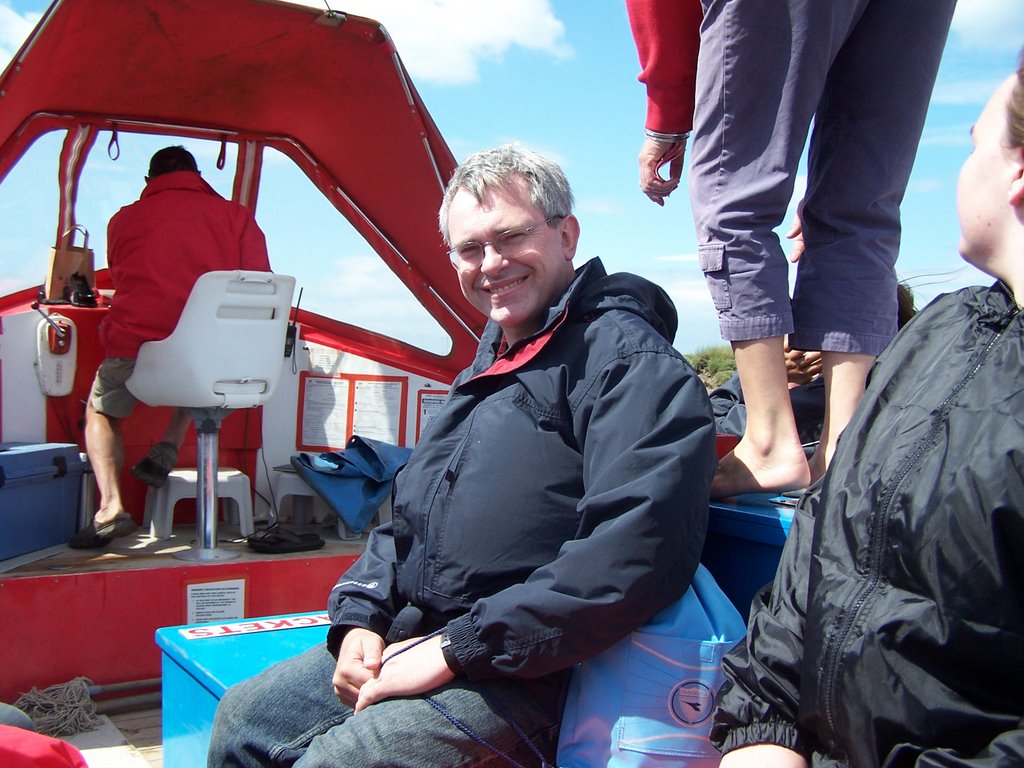 As you can see I got soaked!!!!
What struck me most about this book was his discussion toward the end about letting go of control. Many people we know need to have complete control of all situations. They don’t like to be alone, or try new things without someone being with them. I have found in my life that these are the moments when I learn the greatest things about myself and my fellow human beings. Brookes talks to the photographer, Tomasz, about this:
I couldn’t shake a very strong sense that giving up control exerts some kind of attraction that is, in the language of quantum physics, “non-local”: It affects people and even objects in ways and at distances that it shouldn’t. It doesn’t seem to have much to do with the conscious mind; in fact, our conscious mind seems mostly to get in the way, by second-guessing and worrying too much. Every time I’ve stated worrying about whether I’ll get a ride, I told him, it has done me no good… (238-239)
If you never like to do new things where you aren’t in control of the situation…you never learn that you don’t NEED to be in control. Things will work out on their own, if you let them. When I flew on my own for the first time I found it so exhilarating and very scarey! But I found that no matter what problems might creep up, I learned that I could handle the issue with an inner strength that I didn’t know I had. I use this often now when I need to travel on my own. If you don’t have a car to control you have to allow others to get you from A to B. All you can do is plan the route to your best ability and then trust that if for some reason something happens that doesn’t go to your plan, you can still work through what you need to do to get there.
Brookes also talks about strangers:
Many of the people who bring about the greatest changes in our lives are strangers, and, by the same token, many of the most important events seem to arise by sheer coincidence (239).
I’ve been amazed at how people react to you if you are traveling on your own. I’ve had such friendly interesting conversation with people that I wouldn’t have had if I was with someone. Sometimes these are the times when you get not only an insight into yourself, but also to what people are really like. Recently I’ve started doing crafts again. I never stopped really, but I haven’t been going at it with such ferver as before. I’ve let some strangers into my life that have changed me. People have challenged my view of arts and crafts, who have made me learn new skills. Sometimes you just have to be open to it, or stagnate and become someone who is unhappy because life can’t be controlled. Things are going to happen. I have faith that a positive outlook on life and my ability to face trails will actually not let terrible things happen. If I hadn’t married Rich and moved clear across the globe, would I be as happy…no…but I trusted him and me and felt that we could make it. Four years on, we are still happy and thriving in our life. This books really made me see that more then I had before. Sometimes books just do that!

